
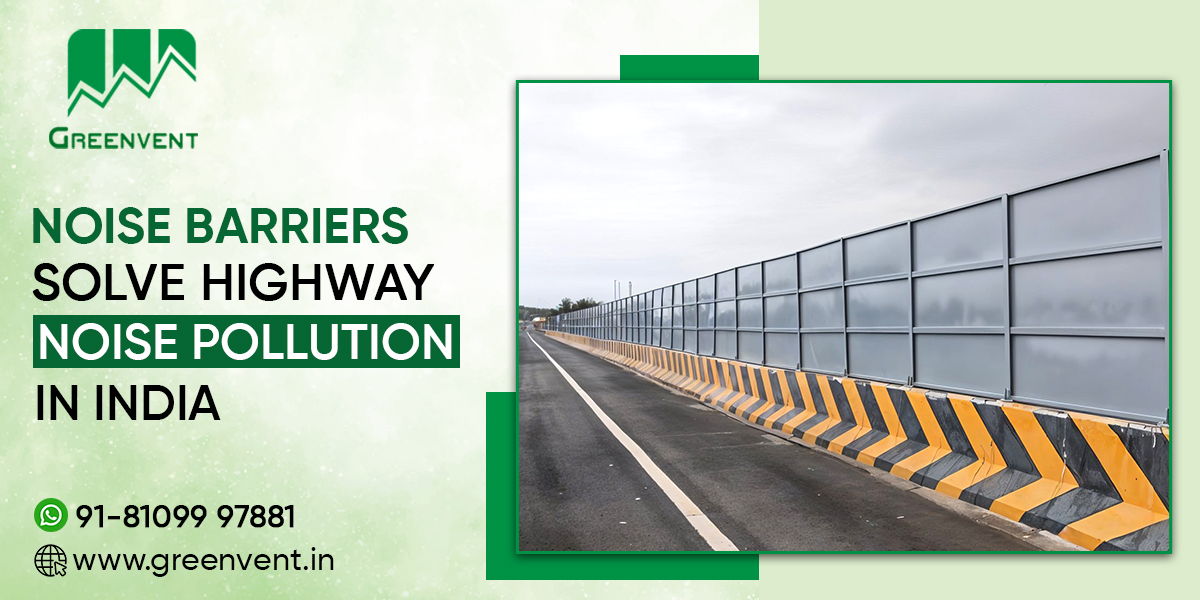
Highway noise pollution is a rising concern in India. With more roads and growing traffic, many areas near highways are exposed to loud noise every day. Homes, schools, and offices located near highways often face constant sound disturbances. To solve this, road planners now use noise barriers. These barriers are a standard feature of all major road projects under Indian regulations. They reduce traffic noise and improve the environment around roads. Noise barriers are a simple and effective way to protect people from harmful sound levels.
What Is Highway Noise Pollution?
Highway noise pollution happens when road traffic produces loud sounds that reach nearby areas. Common sources include:
- Engine and exhaust noise
- Honking and braking sounds
- Tyre friction from fast-moving vehicles
- Vibrations caused by heavy trucks
The Central Pollution Control Board (CPCB) has set clear noise limits:
Zone TypeMax Noise Limit (Day/Night)
Residential – 55 dB(A) / 45 dB(A)
Commercial – 65 dB(A) / 55 dB(A)
Silent Zones (e.g. schools) – 50 dB(A) / 40 dB(A)
However, real-world readings near highways often exceed 85–95 dB(A). This high noise level can harm health and learning. To reduce it, noise barriers are now widely used on roads and flyovers.
How Do Noise Barriers Work?
Noise barriers function like walls, separating the road from nearby areas. They stop sound from reaching homes, schools, or offices. These barriers work in three main ways:
- Block sound: They stop direct sound waves from reaching buildings
- Absorb sound: They use materials that soak up noise
- Reflect sound: They push noise back to the road or upwards
For good results, barriers should be:
- Tall enough to block sound
- Made from dense materials
- Close to the road and the area needing protection
The barrier’s height, type of material, and placement decide how much noise it can reduce. A well-designed barrier can lower sound by up to 28 dB(A).
Materials Commonly Used in Highway Noise Barriers
Indian highways face brutal weather conditions, like heat, rain, dust, and intense sunlight. Therefore, noise barriers must be robust and durable. These are the common materials used:
- Galvanised Steel: Strong and rust-free. Used with sound-absorbing filling.
- Precast Concrete: Heavy and durable. Reflects sound but absorbs less.
- Transparent Acrylic or Polycarbonate: Used in cities where visibility is needed.
- Hybrid Barriers (Steel + Acrylic): It is used in smart cities for both visibility and sound control.
- Absorptive Panels: These reduce reflected noise on the traffic-facing side.
These materials are selected because they offer:
- High sound-blocking ability (STC rating)
- Resistance to rain, sun, and pollution
- Fast installation using modular designs
What Types of Noise Barriers Are Used on Indian Highways?
1. Metallic Absorptive Barriers
These are used on roads like the Delhi–Meerut Expressway. They are made with steel panels and filled with absorptive material such as mineral wool. They reduce sound by 20–25 dB(A).
2. Concrete Reflective Walls
Seen in older projects, these barriers reflect sound. They are useful in open areas but not suitable in cities where echoes can be a problem.
3. Transparent Barriers
Used in city flyovers and road intersections. They maintain clear views while lowering noise by 12–18 dB(A). Materials like Acrylic are used.
4. Hybrid Systems
A mix of metal and Acrylic. These are used in modern city roads and metro corridors. They give both noise reduction and visibility.
Why Are Noise Barriers Important for Government Projects?
Noise barriers are not optional anymore. They are now part of the road and metro project rules in India. Here’s why they are needed:
- CPCB rules say noise control is a must near homes and schools
- IRC SP:115-2018 gives clear design rules for noise barriers
- EIA approvals need proper sound protection
- Courts have asked road agencies to control highway noise
For bodies like NHAI, metro boards, and state PWDs, these barriers are vital to:
- Follow legal rules
- Protect people’s health
- Avoid delays in road projects
- Improve environmental scores for green building ratings
Example: Where Are Noise Barriers Already Used?
Many Indian projects now use noise barriers to reduce traffic sound. Here are some examples:
- Delhi Metro Yellow Line: Acrylic Barriers used near schools for safety purpose
- Pune Metro: Hybrid barriers used in crowded areas
- Bangalore Airport Road Flyover: Transparent acrylic barriers used for road visibility
- Lucknow Ring Road: Steel barriers used to control noise in mixed-use areas
These projects adhered to all CPCB and IRC guidelines. GreenVent and other experts helped make these sites quieter and safer.
Summary: Technical Control Made Simple
Feature: Highway Requirement
Noise Reduction: 15–28 dB(A), based on type and height
Material Quality: Must meet IS, ISO, IRC: SP:115
Weather Resistance: UV-safe, rustproof, fire-rated
Speed of Installation: Up to 500 metres per day
Maintenance: It lasts 10–15 years with low upkeep
Need Acoustic Control for Your Road Project?
- Plan early: Incorporate noise barriers into the project design phase to minimise changes later.
- Use tested materials: Pick barriers that meet Indian and global standards.
- Choose trusted experts: Work with reliable firms like GreenVent for planning, supply, and setup.
Noise barriers are not just practical—they are necessary. They protect homes, improve learning spaces, and make cities quieter. For roads, metro lines, and flyovers, noise barriers help build a better and more peaceful India.
FAQ Content
Q1. What are noise barriers and why are they used on highways?
Noise barriers are structures installed alongside roads to block or reduce traffic noise. They help protect residential areas, schools, and offices from harmful sound levels.
Q2. How effective are GreenVent noise barriers in reducing highway noise?
GreenVent noise barriers can reduce noise by 15–28 dB(A), depending on the type and height. They are built using certified materials for maximum acoustic performance.
Q3. What materials are used in GreenVent noise barriers?
GreenVent uses high-quality materials like galvanised steel, acrylic panels, and hybrid combinations. These are weather-resistant and follow IS, ISO, and IRC standards.
Q4. Are noise barriers required by Indian road authorities?
Yes. CPCB and IRC guidelines make noise mitigation mandatory near sensitive areas. Noise barriers are now a key part of road and metro projects in India.
Q5. Where are GreenVent noise barriers already in use?
GreenVent has installed noise barriers on projects like the Delhi Metro, Pune Metro, and Bangalore Airport Road, helping reduce noise near schools and urban areas.
Q6. How fast can noise barriers from GreenVent be installed?
GreenVent uses modular systems that allow quick installation—up to 500 metres per day. This ensures timely delivery for highway and urban infrastructure projects.